MCCANN JAPAN RELEASES FINDINGS FROM ITS “TRUTH ABOUT GLOBAL BRANDS” STUDY
MCCANN JAPAN RELEASES FINDINGS FROM ITS “TRUTH ABOUT GLOBAL BRANDS” STUDY UNVEILING A NEW PLAYBOOK FOR GLOBAL BRAND GROWTH INTRODUCING THREE STRATEGIC IMPERATIVES TO HELP BRANDS NAVIGATE DECLINING TRUST, ECONOMIC PRESSURES, AND GLOBAL FRAGMENTATION
【TOKYO, Japan — October 16, 2026】 McCann Japan Inc. (Representative Director & CEO: Takashi Aoki; Headquarters: Minato-ku, Tokyo) hosted the Japan launch seminar for its latest global study, “The Truth About Global Brands,” on October 14, 2026. Each year, McCann Truth Central, the company’s in-house global research unit, selects a theme that reflects the defining issues of the times and conducts proprietary research on a global scale. The original English-language edition of “The Truth About Global Brands” was presented at Cannes Lions 2026 and developed in collaboration with Economist Enterprise. The report is based on a quantitative survey of more than 20,000 respondents across 20 markets, as well as interviews with senior leaders and CMO-level executives from leading global brands. Set against the backdrop of declining trust, economic pressures, and global fragmentation, the report introduces a new playbook for global brands built around three strategic imperatives: Eradicate Doubt, Find Future Audiences, and Harness Cultural Flows.
CHANGING DYNAMICS SHAPING GLOBAL BRANDS
Across global markets, brands continue to navigate an increasingly complex environment shaped by diverging policies and regulations, rising nationalism, market fragmentation, and economic uncertainty. Trust has become one of the defining pressures shaping modern brand-building, with consumer trust becoming harder to earn and easier to lose than ever before. The idea of what makes a brand truly global is also changing. Rather than shaping the world around a single set of values, brands must understand the distinct cultures of different regions and communities and recognize the values and influences that flow between them.
THREE STRATEGIC IMPERATIVES OF THE NEW PLAYBOOK
1. ERADICATE DOUBT
According to the study, 80% of people globally actively choose brands they trust, even if they cost more. Furthermore, 69% have stopped using a brand because they no longer trusted it. Building trust requires brands to align their actions with what they say and to communicate reliable information clearly and consistently. To help brands eradicate doubt, the report identifies four essential principles: Credibility, Clarity, Consistency, and Context.
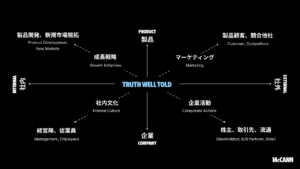 As AI-mediated touchpoints continue to increase, it is becoming increasingly important for brands to ensure that they are accurately understood and presented as relevant choices. This requires ensuring that brands provide accurate and consistent information, build credibility backed by expertise, and strengthen their presence in consumers’ decision-making journeys. The report proposes putting TRUTH WELL TOLD™ , McCann’s enduring platform, at the center of the brand ecosystem and argues that a brand’s core truth serves as its immune system, making the clear definition and articulation of that truth essential to protecting the brand.
2.FIND FUTURE AUDIENCES
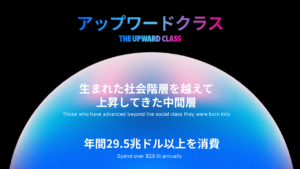 Rising prices for everyday necessities and other economic pressures are reshaping consumer purchasing behavior and the value people expect from brands. The report points to the need for brands to look beyond
traditional segmentation based on age, income, or product category and instead understand what people aspire to and the values that matter most to them. The study found that 86% of respondents aspire to move beyond the social class they were born into and pursue new lifestyles, viewing brands not just as products but as expressions of their values and aspirations. McCann defines this group as the “Upward Class.” To identify new opportunities for growth, brands must determine how they can become a symbol of progress for this group.
3. HARNESS CULTURAL FLOWS
Culture is no longer shaped by a single center and transmitted in one direction. It is becoming faster, more fragmented, and increasingly multidirectional, continuously being reinterpreted across regions and communities. In this environment, brands must maintain shared values while designing ideas and systems that reflect cultural connections and flows.
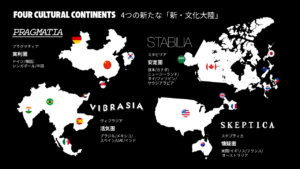 The report introduces “Cultural Value Mapping,” a framework for understanding markets through shared values rather than geography. Drawing on Hofstede’s Cultural Dimensions, it analyzes markets across six cultural value dimensions and identifies four market clusters based on shared mindsets, behaviors, and cultural values. Rather than imposing a single set of values on diverse cultures, the report suggests that successful global brands will be those that respect cultural differences while identifying the fundamental values that connect people across markets.
At the seminar, Daniela Suwa, Associate Strategic Planning Director at McCann Japan, presented the findings of the study. The presentation was followed by a panel discussion featuring Ryuichiro Takai, Deputy General Manager, Imaging Solution Division, FUJIFILM Corporation; Shiho Nagasaka, Marketing Regional Portfolio Director, AMEA, Mars; and Asuka Yoshii, Director of Marketing APAC, DeepL Japan G.K. Moderated by Mariko Hara, Strategic Planning Manager at McCann Japan, the discussion explored the implications of the study for global brands.
Drawing on FUJIFILM’s experience in driving the growth of the Instax™ business by redefining the value of photography, Takai emphasized the importance of continually reexamining a brand’s core essence and communicating it consistently over time. He also highlighted the need for a deep understanding of consumers as the starting point for this process.
Meanwhile, Nagasaka noted that it is important not only to view the world market by market, but also to approach it with curiosity and understand the thoughts, motivations, and emotions behind what is happening around us. She also spoke about the importance of nurturing brands through ongoing dialogue with consumers.
Yoshii, who works at the forefront of global communication at DeepL, emphasized the importance of keeping people at the center of marketing, consistently delivering a clear message, and ensuring that the brand itself continues to embody that message.